Poena Station
An atmospheric platform hovering within Nuilea’s upper atmosphere. The operational heart of Project BLUESPIRE and the brutal reality of Nuilean helium-3 extraction.
Overview
Poena Station floats in Nuilea’s crushing atmosphere—similar in concept to Aeolus Station on Mesulea, but operating under far more dangerous conditions. Nuilea’s gravity is nearly double Mesulea’s, making every aspect of atmospheric operations more difficult, more expensive, and more lethal.
Population: ~25,000 crew + classified number of prisoners
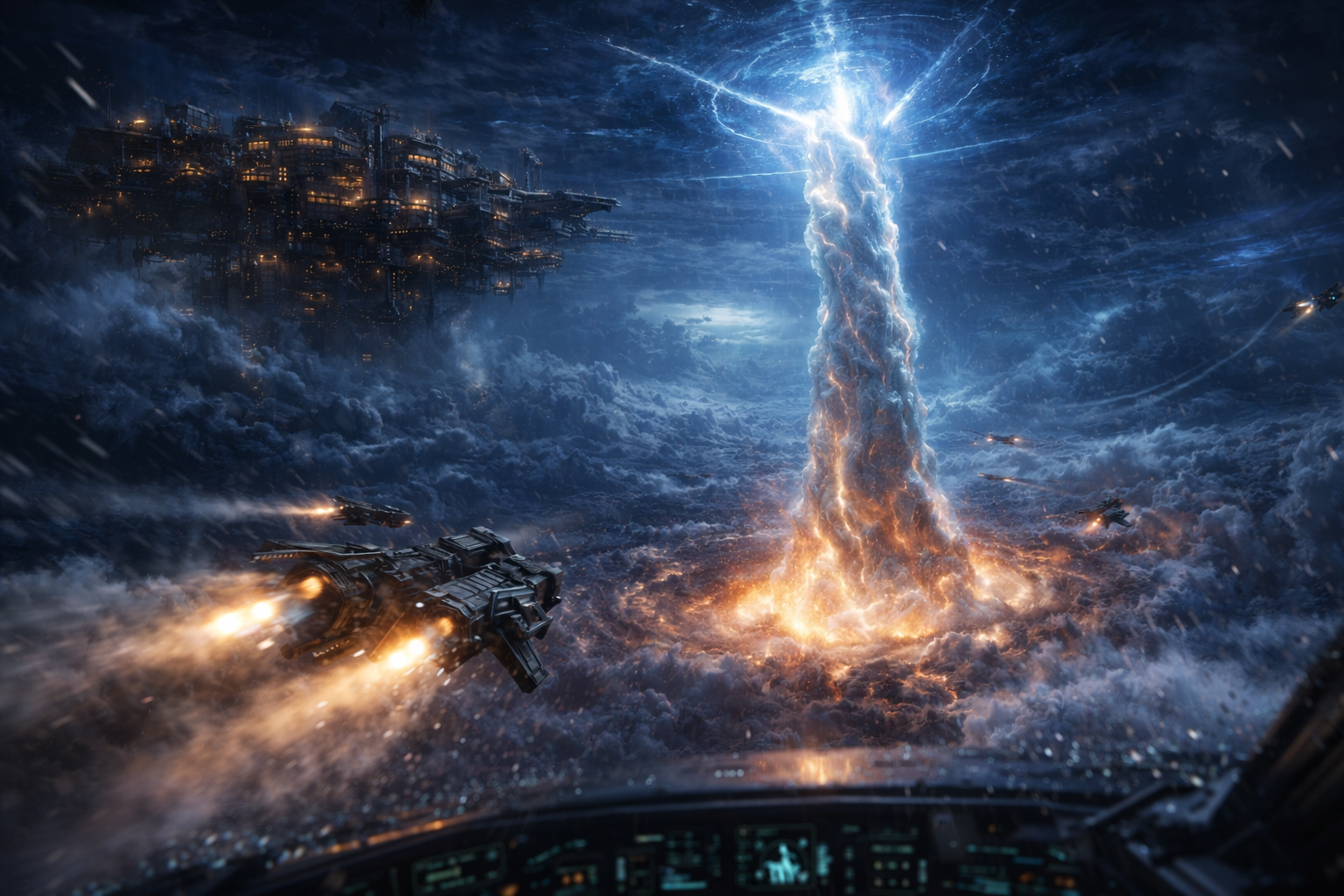
Concept Art
Dual Purpose
Poena Station serves two very different functions—and two very different populations.
1. Project BLUESPIRE Operations
The glamorous face of Nuilean He-3 independence. When fusion pulses are detonated and mazer arrays shape a harvestable spire, Poena coordinates the skimmer runs.
The Pilots
BLUESPIRE skimmer pilots are elite. They fly extreme-performance craft into superheated columns of rising gas, racing to harvest helium-rich fractions before the spire collapses. The work is dangerous, the pay is extraordinary, and the cultural cachet is immense.
In Nuilean entertainment media, BLUESPIRE pilots are portrayed as male sex symbols—macho, fearless, impossibly cool. They’re seen as more glamorous than military pilots, more daring than any other profession. “Riding the spire” has become slang for taking extreme risks with style.
Pilot Culture
- Extreme confidence bordering on arrogance
- Competitive swagger between crews
- Heavy drinking and hard partying during downtime
- Deep bonds forged by shared danger
- Contempt for desk jobs and “safe” careers
The pilot quarters on Poena are well-appointed—good food, entertainment facilities, medical care. These are valuable assets, and they’re treated accordingly.
2. Traditional He-3 Extraction
Beneath the pilot quarters and mission control, Poena also runs conventional atmospheric mining operations. This is where the glamour ends.
The Prisoners
Enslaved convicts fitted with gravity-survival implants work the brutal extraction rigs. The implants are invasive cybernetic systems that allow human bodies to function under Nuilea’s crushing atmospheric pressure—without them, the work would be impossible.
The prisoners are:
- Convicted criminals serving “labor sentences”
- Political prisoners (quietly, unofficially)
- Debtors who “volunteered” to clear obligations
- People who simply disappeared
Their existence is an open secret. Most Nuilean citizens know, on some level, that He-3 independence comes at a human cost. But it’s not discussed in polite society. The prisoners are hidden from public view, their labor invisible, their suffering unacknowledged.
Conditions
The lower decks are industrial horror:
- Cramped, dark, hot
- Constant pressure from the atmosphere outside
- Equipment that breaks down, injuries that go untreated
- Mortality rates that are classified but rumored to be horrific
Prisoners who survive their sentences are released with permanent health damage. Many don’t survive.
Station Layout
Upper Decks: Mission control, pilot quarters, medical facilities, recreation. Clean, well-maintained, professional atmosphere.
Middle Decks: Technical operations, maintenance, supply storage. Functional industrial space.
Lower Decks: Extraction operations, prisoner labor quarters, processing equipment. Dark, hot, restricted access. Most station crew never go down there.
Character
Poena Station has a split personality. Walk the upper corridors and you’ll see confident pilots, dedicated technicians, a sense of purpose and patriotic pride. The lower decks are a different world—one that the upper decks pretend doesn’t exist.
The station is simultaneously:
- A symbol of Nuilean independence and ingenuity
- A testament to human courage and technical achievement
- A site of systematic human rights abuse
- A moral compromise that Nuilean society has chosen to accept
See also: Project BLUESPIRE, Nuilea